 Prana Path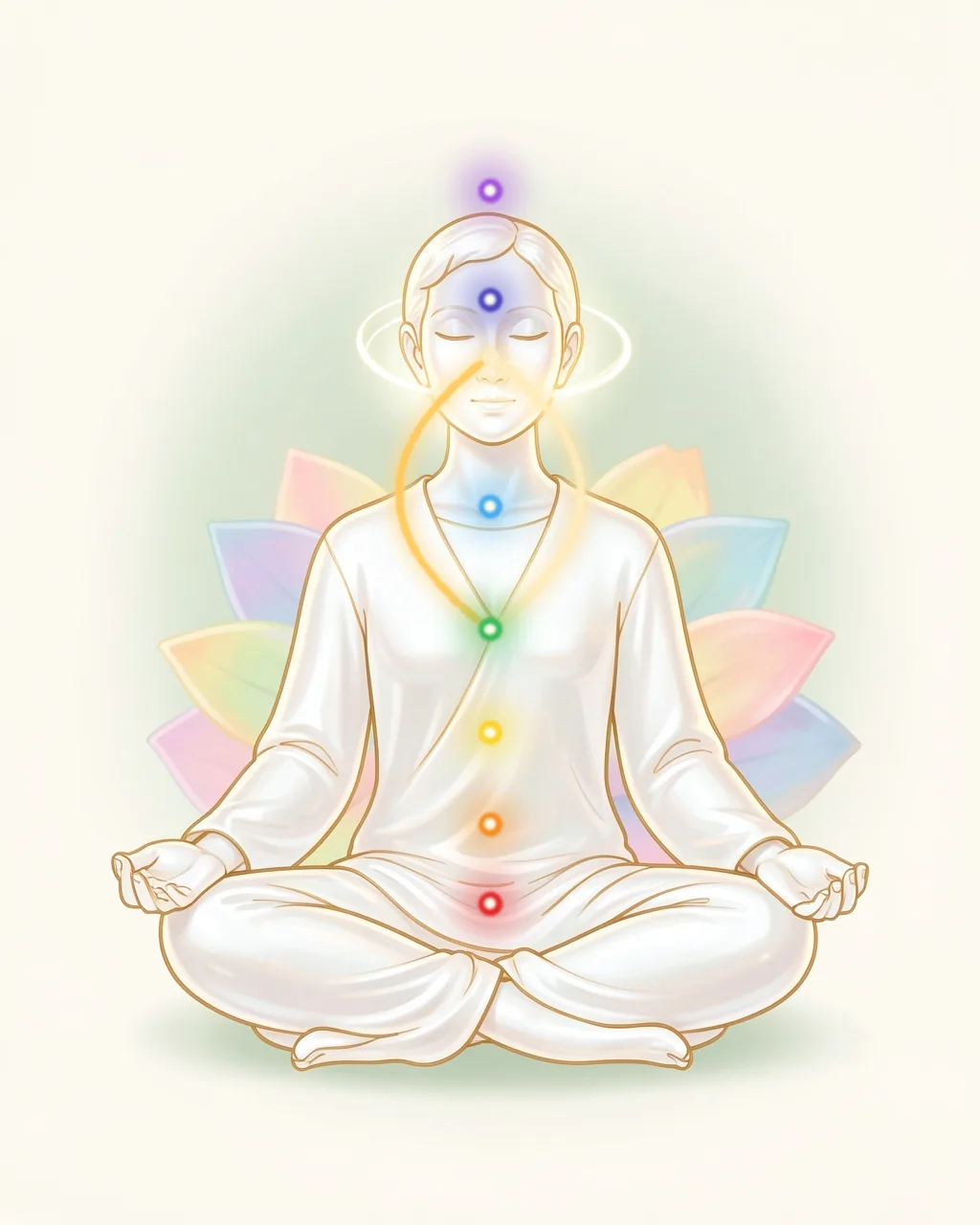
The Breath's Own Mantra (So-Ham, Ajapa)
vrajet prāṇo viśej jīva icchayā kuṭilākṛtiḥ |
dīrghātmā sā mahādevī parakṣetram parāparā || 154 ||
ṣaṭśatāni divā rātrau sahasrāṇyekaviṃśatiḥ |
japo devyāḥ samuddiṣṭaḥ sulabho durlabho jaḍaiḥ || 156 ||
The breath goes out and the breath comes in, by its own will. This flow is the great Goddess herself, the highest field. Walking along with her and resting in her, you reach Bhairava (Shiva, as pure awareness). Twenty-one thousand six hundred times in a day and a night: that is the Goddess's repetition. It is easy to have, yet people who do not pay attention miss it.
What the verse points to
Near the end of the text, Bhairava is asked what real japa is. Japa means repeating a mantra (a sound or word used in meditation). His answer is the breath itself. It goes out and comes in without any effort. By the text's count, this happens about 21,600 times a day. Later tradition calls this ajapa japa. That means 'the repetition that repeats itself'. People often hear it as the sounds so (in) and ham (out). These verses come from the closing teaching, after the 112 methods. Still, they are the natural home of all the breath practices above.
Breathe along
In - 'so' 4 · Out - 'ham' 4 (seconds) - repeat. Counts are a guide; go slower or shorter if you need to.
How to practise
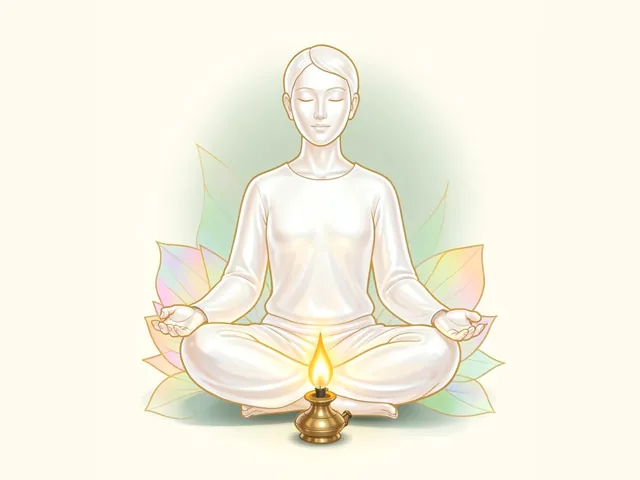
Sit in any way that is comfortable. You can sit cross-legged on a cushion, or upright on a chair with your feet on the floor. The person in the picture sits in lotus pose, with each foot resting on the opposite thigh. You do not need to sit that way.
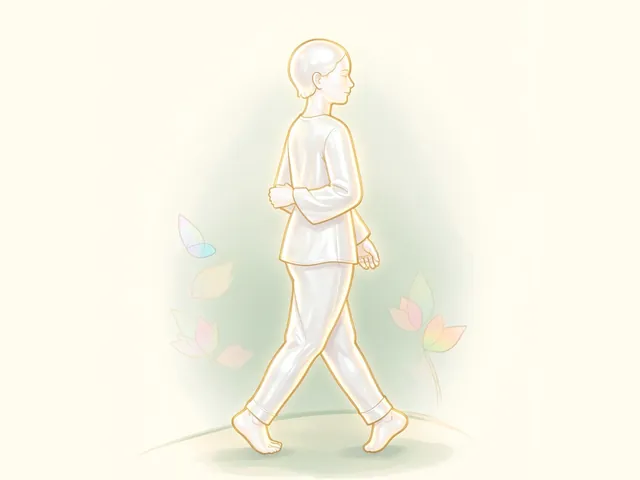
- Sit, stand or even walk slowly. Keep your eyes open or closed.
- Do not control the breath at all. Simply notice it going out and coming in by itself.
- If it helps, hear the in-breath as a soft 'so' and the out-breath as a soft 'ham'. Do this silently, without forcing the rhythm.
- Let the breath be the mantra. You are only listening.
- Start with 5 minutes. Later, you can come back to it for a few breaths at any time of day.
What you may notice
- How the breath carries on perfectly without your help.
- A gentle, friendly feeling towards your own body.
- Calm returning more quickly during a busy day.
Tips
- The counts in the animation are only a guide. Your natural rhythm is the real one.
- Try three conscious breaths before meals, meetings or sleep.
- It combines well with Walking Meditation: one step in, one step out.
Source: Vijñānabhairava, verses 154-156. Sanskrit from Vijñānabhairava, Sanskrit e-text (GRETIL, input by Marino Faliero, 1998). English rendering and practice notes by Prana Path. About the text
More methods from the series
The breath moves up and out. The breath moves down and in. In this flow, the supreme power (the divine energy behind all life) breathes itself out.…
The breath may have gone in, or it may have gone out. When it does not hurry back from those two spaces, then, O Bhairavi, the true form of Bhairava…
Sometimes the energy that moves as breath neither goes out nor comes in. Then the centre opens like a flower, free of thought. In that middle, your…
Related practices
Related reading
This is general wellness information, not medical advice. Move slowly, never force a pose or a breath, and stop if you feel pain, dizziness or breathlessness. If you are pregnant, have high blood pressure, heart, lung or eye conditions, or recent surgery, ask your doctor before starting.