 Prana Path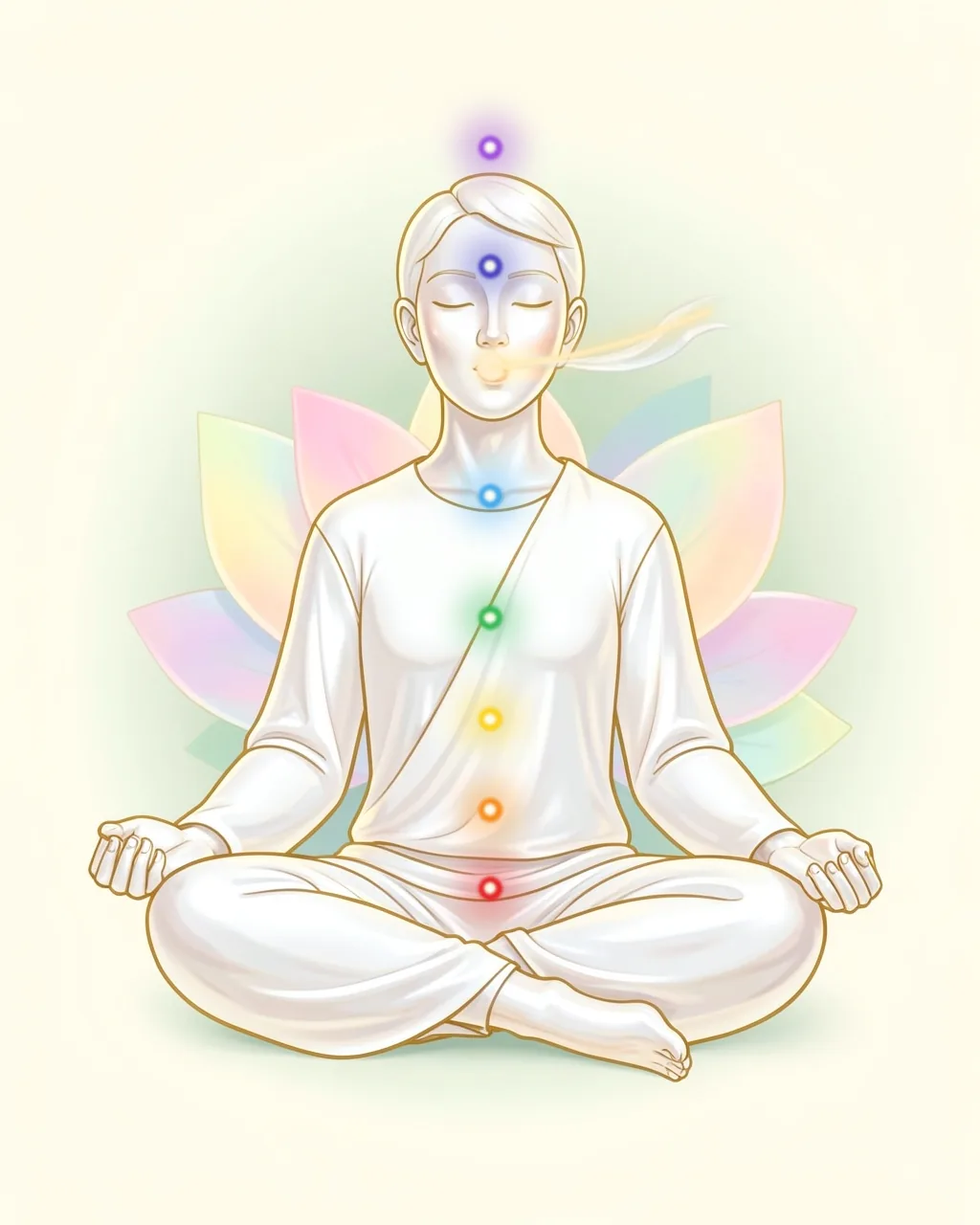
The Silent 'Ha' with an Open Mouth
madhyajihve sphāritāsye madhye nikṣipya cetanām |
hoccāraṃ manasā kurvaṃs tataḥ śānte pralīyate || 81 ||
Rest the tongue in the middle and open the mouth. Place your awareness in that middle space. Silently sound 'ha' in your mind. Then you dissolve into peace.
What the verse points to
This method combines the breath, the mouth and a sound. The mouth is open and the tongue rests in the centre. With each out-breath, you 'say' the sound ha only in your mind. Ha is close to the natural sound of a relaxed out-breath. This helps the body let go. The verse ends with śānta, which means peace.
Breathe along
Breathe in (nose) 4 · Breathe out - silent 'ha' 6 (seconds) - repeat. Counts are a guide; go slower or shorter if you need to.
How to practise
Sit in any way that is comfortable. You can sit cross-legged on a cushion, or upright on a chair with your feet on the floor. The person in the picture sits in lotus pose, with each foot resting on the opposite thigh. You do not need to sit that way.
- Sit comfortably and relax your face.
- Let your lower jaw drop slightly so the mouth is gently open. Rest the tongue softly in the middle of the mouth, not touching the teeth.
- Breathe in through the nose for about 4 counts.
- Breathe out slowly through the open mouth for about 6 counts. As you do, silently sound 'haaa' in your mind.
- Keep your attention in the open space of the mouth.
- Repeat for 3 to 5 minutes, then close the mouth and breathe naturally through the nose.
What you may notice
- The jaw, tongue and throat relaxing.
- A sigh-like release in the chest.
- Quiet in the mind as the silent sound fades.
Tips
- Keep the mouth only slightly open - not stretched.
- If your mouth gets dry, take a sip of water and carry on, or shorten the practice.
- This is a lovely way to unwind after work or before Bee Breath.
Source: Vijñānabhairava, verse 81. Sanskrit from Vijñānabhairava, Sanskrit e-text (GRETIL, input by Marino Faliero, 1998). English rendering and practice notes by Prana Path. About the text
More methods from the series
Related practices
Related reading
This is general wellness information, not medical advice. Move slowly, never force a pose or a breath, and stop if you feel pain, dizziness or breathlessness. If you are pregnant, have high blood pressure, heart, lung or eye conditions, or recent surgery, ask your doctor before starting.