 Prana Path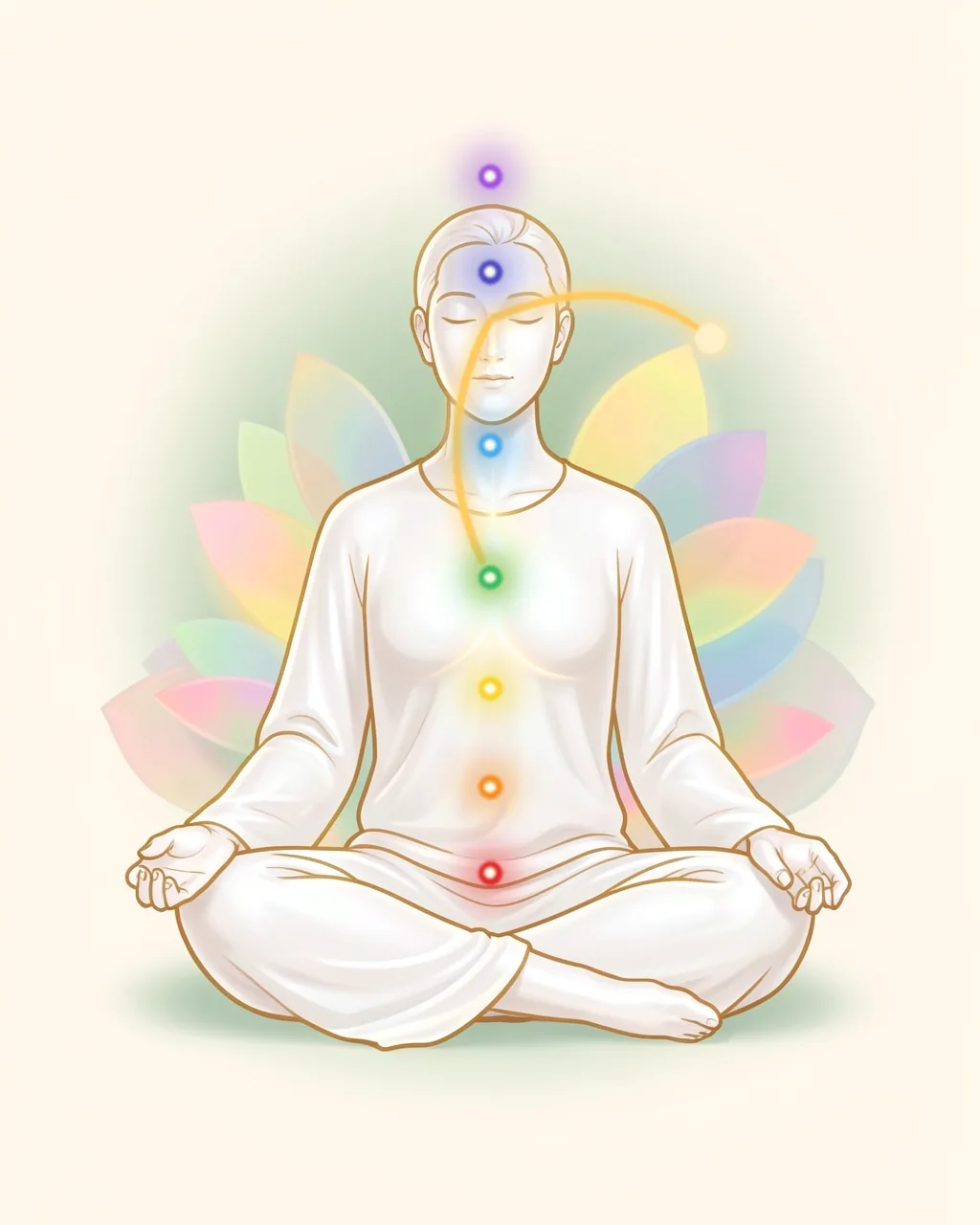
The Two Turning Points of the Breath
ūrdhve prāṇo hy adho jīvo visargātmā paroccaret |
utpattidvitayasthāne bharaṇād bharitā sthitiḥ || 24 ||
The breath moves up and out. The breath moves down and in. In this flow, the supreme power (the divine energy behind all life) breathes itself out. Keep your attention on the two places where each breath is born. Then a state of fullness appears.
What the verse points to
This is the first method that Bhairava gives. Bhairava is a name for Shiva, the deity, here meaning pure awareness. The method asks you to notice the two moments when the breath changes direction. The first is where the in-breath ends and the out-breath begins. The second is where the out-breath ends and the next in-breath begins. The verse calls these the 'two places of arising'. You do not follow the whole breath. Instead, you rest your attention lightly on those two turning points. Traditional readings place one point inside, around the heart. The other is outside, a little way in front of the nose, where the out-breath fades.
Breathe along
Breathe in 4 · Turn 2 · Breathe out 6 · Turn 2 (seconds) - repeat. Counts are a guide; go slower or shorter if you need to.
How to practise
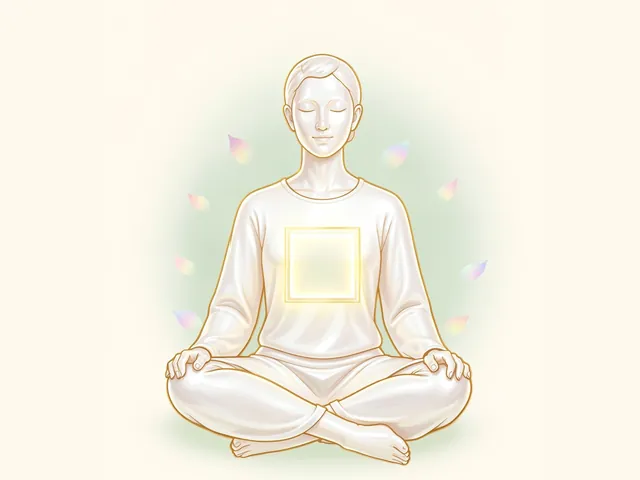
Sit in any way that is comfortable. You can sit cross-legged on a cushion, or upright on a chair with your feet on the floor. The person in the picture sits in lotus pose, with each foot resting on the opposite thigh. You do not need to sit that way.
- Sit comfortably with a straight but relaxed back. Rest your hands on your knees or in your lap and close your eyes.
- Breathe through your nose for a minute without changing anything. Just feel the air moving.
- Now let the breath settle into a soft rhythm. Breathe in for about 4 counts and out for about 6. Do not push. If a count feels long, shorten it.
- As the in-breath finishes, notice the tiny moment when it turns. Feel it around the centre of your chest.
- As the out-breath fades, notice the second turn. Feel it a short distance in front of your nose.
- Keep resting on these two points for 5 minutes. When your mind wanders, simply come back to the next turn.
- To finish, let the breath be fully natural for a few breaths. Then open your eyes slowly.
What you may notice
- The turning points feel softer and wider the longer you watch them.
- A sense of quiet or 'fullness' in the chest.
- Thoughts slowing down at the turns, even for a second.
Tips
- Do not create a pause on purpose - just notice the one that is already there.
- If counting distracts you, drop the numbers and follow the natural rhythm.
- Two or three minutes done well is better than twenty minutes of strain.
Source: Vijñānabhairava, verse 24. Sanskrit from Vijñānabhairava, Sanskrit e-text (GRETIL, input by Marino Faliero, 1998). English rendering and practice notes by Prana Path. About the text
More methods from the series
The breath may have gone in, or it may have gone out. When it does not hurry back from those two spaces, then, O Bhairavi, the true form of Bhairava…
Sometimes the energy that moves as breath neither goes out nor comes in. Then the centre opens like a flower, free of thought. In that middle, your…
The breath may be held, emptied out or filled in. At the end of each, the one called 'Peace' shines out through that power, and you become…
Related practices
Related reading
This is general wellness information, not medical advice. Move slowly, never force a pose or a breath, and stop if you feel pain, dizziness or breathlessness. If you are pregnant, have high blood pressure, heart, lung or eye conditions, or recent surgery, ask your doctor before starting.