 Prana Path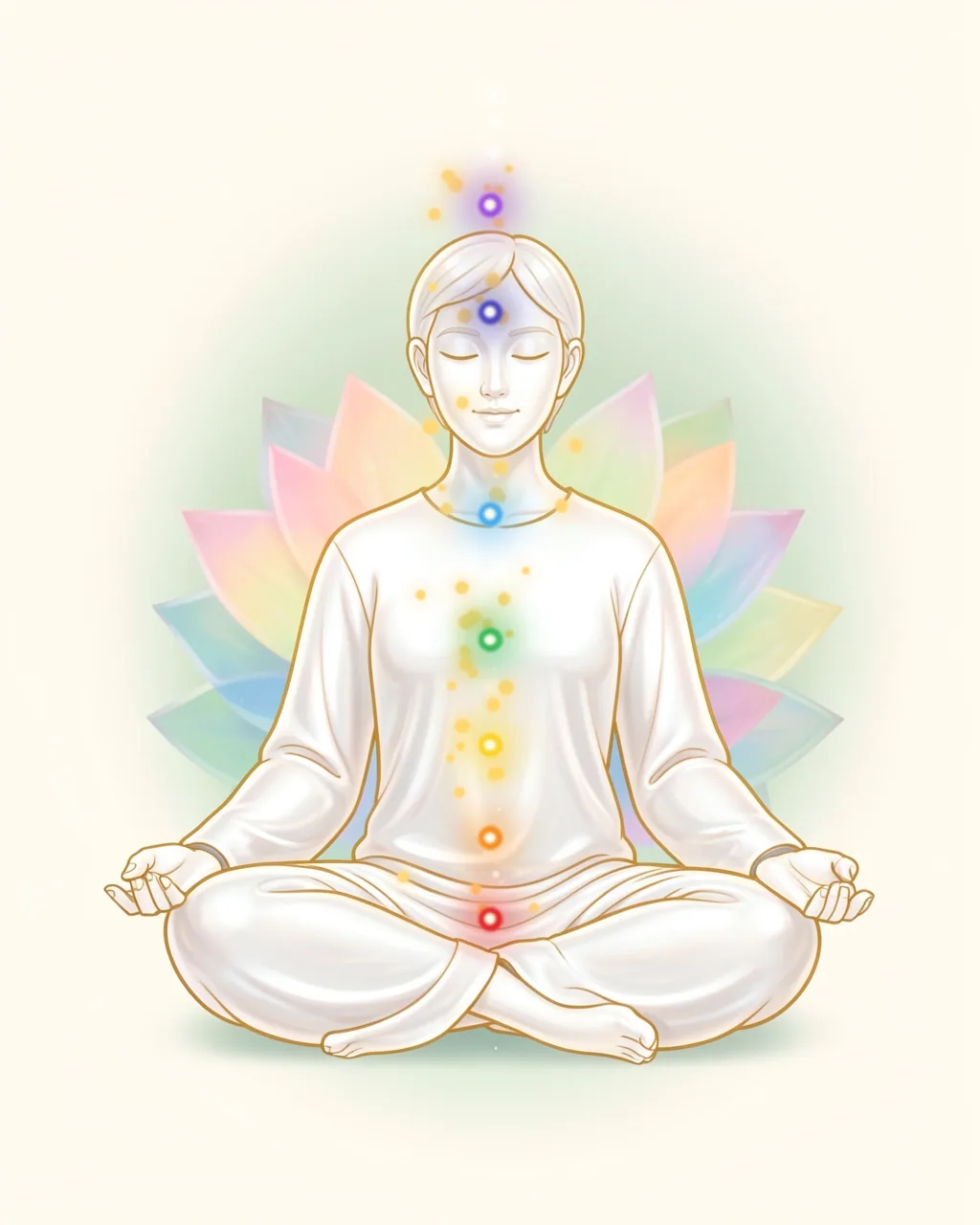
The Breath Rising Slowly, Senses at Rest
sarvasrotonibandhena prāṇaśaktyordhvayā śanaiḥ |
pipīlasparśavelāyām prathate paramaṃ sukham || 67 ||
Gently close all the streams of the senses. Let the breath-energy rise slowly upward. When you feel a light touch, like an ant crawling, the highest happiness spreads.
What the verse points to
The 'streams' (srotas) are the senses. They are the channels through which attention flows out to the world. The verse suggests drawing them in and letting the breath-energy rise slowly. Then you notice the fine, tingling feeling that can come when the body is very still. The verse compares it to an ant's touch. We practise a very gentle version. That means eyes closed, a quiet space and slow breathing, with no forceful closing of anything.
Breathe along
Breathe in slowly 5 · Breathe out slowly 7 (seconds) - repeat. Counts are a guide; go slower or shorter if you need to.
How to practise
Sit in any way that is comfortable. You can sit cross-legged on a cushion, or upright on a chair with your feet on the floor. The person in the picture sits in lotus pose, with each foot resting on the opposite thigh. You do not need to sit that way.
- Find a quiet room. Sit comfortably and close your eyes.
- Let your senses rest. Relax the eyes and soften the jaw and tongue. Let sounds come and go without following them.
- Breathe in slowly for about 5 counts, feeling the breath rise up through the body.
- Breathe out for about 7 counts, letting the body grow still.
- After a few minutes, notice any subtle feelings, such as tingling, warmth or a light buzzing. You may feel them most along the spine.
- Simply enjoy them without chasing them. Practise for 5 to 10 minutes.
What you may notice
- Fine tingling or warmth in the hands, face or spine.
- A quiet, contented feeling.
- Sounds seeming further away.
Tips
- You can gently cup your palms over your closed eyes for a minute. This helps the senses rest.
- Do not try to make these feelings happen. They may or may not appear.
- If tingling comes with dizziness, stop: you may be breathing too deeply. Breathe normally.
Source: Vijñānabhairava, verse 67. Sanskrit from Vijñānabhairava, Sanskrit e-text (GRETIL, input by Marino Faliero, 1998). English rendering and practice notes by Prana Path. About the text
More methods from the series
Rest the tongue in the middle and open the mouth. Place your awareness in that middle space. Silently sound 'ha' in your mind. Then you dissolve into…
The breath goes out and the breath comes in, by its own will. This flow is the great Goddess herself, the highest field. Walking along with her and…
Related practices
Related reading
This is general wellness information, not medical advice. Move slowly, never force a pose or a breath, and stop if you feel pain, dizziness or breathlessness. If you are pregnant, have high blood pressure, heart, lung or eye conditions, or recent surgery, ask your doctor before starting.