 Prana Path
Pranayama for High Blood Pressure: A Gentle Guide
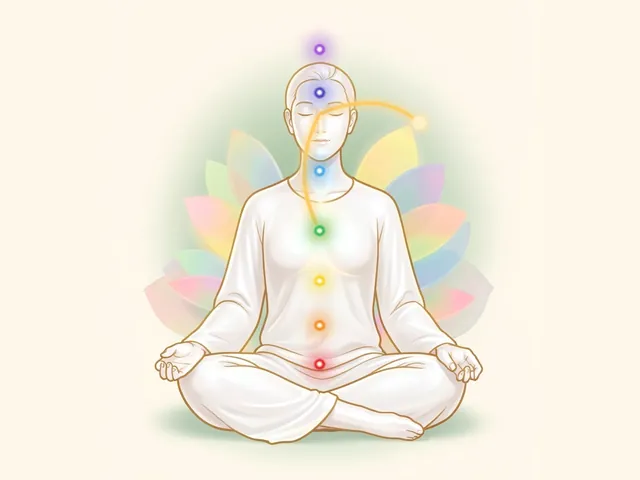
Many people ask if pranayama (breath practice) can help with high blood pressure. Research suggests slow breathing may help a little, but it is not a cure. This guide shows gentle ways to try it safely, alongside your doctor's advice [1].
This is general wellness information, not medical advice. Read our health disclaimer.
What high blood pressure means
Blood pressure is the push of blood against the walls of your arteries (the tubes that carry blood). Two numbers describe it. The top number is the pressure when your heart beats. The bottom number is the pressure when your heart rests [2]. A reading under 120 over 80 is normal. A reading of 130 over 80 or more counts as high [2]. High blood pressure often causes no signs, so regular checks matter [3].
What research says about slow breathing
Slow breathing can bring on the relaxation response (your body's calm state). In this state, breathing slows, the heart rate drops and blood pressure falls [1]. One review looked at 17 studies with 1,165 people. It found that slow breathing brought a small drop in blood pressure [1]. The studies were short and uneven in quality, though. So the results are hopeful, not certain [1].
Gentle breath practices to try
Start with Alternate Nostril Breathing (Nadi Shodhana), which means channel-cleansing breath. You breathe in and out through one nostril at a time, slowly and evenly. Bee Breath (Bhramari) is another calm choice. You hum softly on the out-breath, like a bee. Both practices slow your breathing, which is the key to the relaxation response [1].
Be careful with breath holding
Box Breathing (Sama Vritti), or equal breath, uses even counts for in, hold and out. If you have high blood pressure, keep any hold very short or skip it. Never strain or force the breath. Fast, forceful styles are not a good fit for this goal. Slow and soft is the safer way. Ask your doctor before you start, because high blood pressure can raise the risk of heart attack and stroke [1].
Add calm movement and stillness
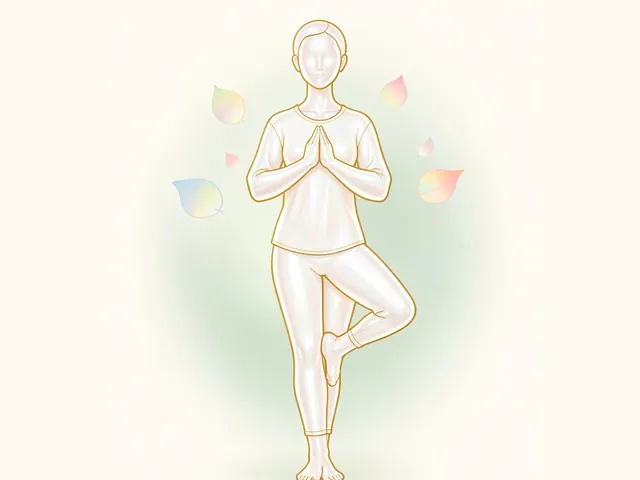
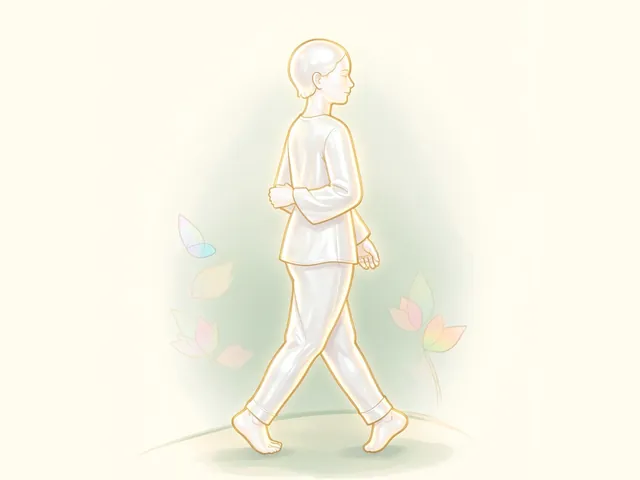
Breathing works well with other quiet habits. Try Tree Pose (Vrikshasana) for steady balance, or Cobra Pose (Bhujangasana) for a gentle chest opening. Walking Meditation (Chankramana) lets you breathe slowly as you stroll. A healthy lifestyle can help prevent high blood pressure [1]. Heart-healthy habits can also stop it from harming your health [3]. Yoga can be one small part of that.
Balance and your doctor's plan
The Bhagavad Gita (Gita 6.16-17) teaches balance in eating, sleeping and effort. Yoga works best for people who avoid extremes. Apply this to your practice: go gently and be regular. Keep following the treatment plan from your health care provider. This is the most important thing. A plan can help delay serious problems [1]. Talk with your provider before adding any new practice [1].
Try it: simple steps
- Check with your doctor before you begin.
- Sit in a chair or lie down in a quiet place.
- Relax your shoulders, jaw and belly.
- Breathe in through your nose for a count of four.
- Breathe out slowly for a count of four to six.
- Do this for two to five minutes, then rest.
- Stop at once if you feel dizzy or unwell.
Questions people ask
Can pranayama lower blood pressure?
Slow breathing may lower blood pressure by a small amount, but the studies so far are short and uneven [1]. It does not replace medicine or your doctor's plan.
Which pranayama is best for high blood pressure?
Gentle, slow styles such as Alternate Nostril Breathing and Bee Breath are good starting points. Avoid long breath holds and forceful breathing. Ask your doctor first [1].
Can I stop my medicine if I practise breathing?
No. Keep taking your medicine as your health care provider tells you. Following your treatment plan can prevent or delay serious problems [1].
How often should I practise?
A few minutes each day is enough to start. Short, regular sessions are kinder than long ones. Build up slowly and rest whenever you need to.
Sources
- NCCIH: Relaxation Techniques · U.S. National Institutes of Health
- MedlinePlus: High Blood Pressure · U.S. National Library of Medicine
- MedlinePlus: How to Prevent High Blood Pressure · U.S. National Library of Medicine
Written with AI assistance from the sources above, then checked for copied text and risky health claims. How we write
Practise it here
Related reading
This is general wellness information, not medical advice. Move slowly, never force a pose or a breath, and stop if you feel pain, dizziness or breathlessness. If you are pregnant, have high blood pressure, heart, lung or eye conditions, or recent surgery, ask your doctor before starting.