 Prana Path
Yoga Stretches for Shoulders and Neck: Gentle Guide
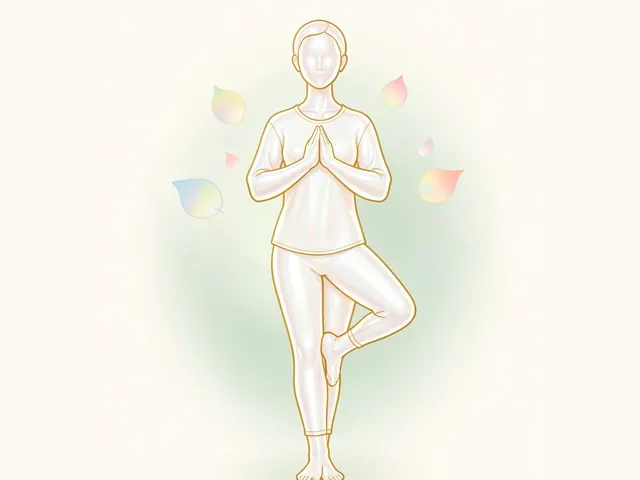
Many people feel tight around the shoulders and neck. Gentle yoga gives you a calm way to move and breathe. This guide shares simple stretches, safety tips and easy breath practices for beginners.
This is general wellness information, not medical advice. Read our health disclaimer.
Why try yoga for the shoulders and neck?
Yoga is an old practice rooted in Indian philosophy. It mixes asanas (yoga poses), pranayama (breath practice) and meditation (calm, quiet focus) [1]. Research suggests yoga may relieve neck pain [1]. It may also help with stress and sleep [1]. Yoga is not a cure, so see a doctor if your pain is strong or does not go away.
Get ready before you stretch
Yoga styles range from very gentle to quite demanding [1]. As a beginner, choose the gentle end. Sit or stand tall, relax your jaw and let your arms hang loose. Move slowly and never push into sharp pain. If you feel numbness, tingling or dizziness, stop and talk to a doctor.
Gentle neck stretches to try first
Research suggests yoga may ease neck pain, so slow neck moves are a kind place to begin [1]. Sit comfortably and lower your right ear toward your right shoulder. Stay for five slow breaths, then switch sides. Next, turn your head gently to look over one shoulder, and then the other. Keep every move small and smooth.
Easy shoulder stretches
Start with shoulder rolls. Lift your shoulders toward your ears, draw them back and let them drop. Then hug one arm across your chest and hold it with the other hand. Yoga may support general wellness, including mood and emotional health, so enjoy the quiet moment [1]. For a soft chest opener, try Cobra Pose (Bhujangasana), and keep your back bend small.
Add calming breath practice
Breath practice is a core part of yoga [1]. Try Bee Breath (Bhramari) after your stretches. Hum softly as you breathe out and let your face and shoulders soften. You can also try Box Breathing (Sama Vritti), which uses an even count for each part of the breath. A 2020 review looked at 12 studies of healthy adults. All 12 found helpful effects on perceived stress after yoga [1].
Keep your practice balanced
The Bhagavad Gita (Gita 6.16-17) says yoga suits people who stay moderate. It means not too much food, rest, work or play. Apply that idea to your stretching. Do a little each day instead of one long, hard session. Yoga may also help sleep and balance, and steady habits often work best [1].
Try it: simple steps
- Sit tall and take three slow breaths.
- Roll your shoulders back five times.
- Tilt your right ear toward your right shoulder for five breaths.
- Switch to the left side.
- Hug one arm across your chest for five breaths, then switch.
- Turn your head gently to look over each shoulder.
- Finish with a few rounds of Bee Breath (Bhramari).
Questions people ask
What is the best yoga stretch for a stiff neck?
A gentle side tilt is a good start. Lower one ear toward your shoulder and breathe slowly. Research suggests yoga may relieve neck pain, but see a doctor if the pain is strong or lasts [1].
How long should I hold each stretch?
Hold each stretch for about five slow breaths. Come out of it gently. Stop if you feel sharp pain.
Can yoga help with stress held in the shoulders?
Yoga may help you manage stress. A 2020 review of 12 studies in healthy adults found helpful effects on perceived stress in every study [1]. Slow breathing and gentle movement are a calm place to start.
How often can I practise these stretches?
A short session each day is a kind pace for most beginners. Keep it gentle and listen to your body. Ask a doctor first if you have an injury or a health problem.
Sources
- NCCIH: Yoga - Effectiveness and Safety · U.S. National Institutes of Health
Written with AI assistance from the sources above, then checked for copied text and risky health claims. How we write
Practise it here
Related reading
This is general wellness information, not medical advice. Move slowly, never force a pose or a breath, and stop if you feel pain, dizziness or breathlessness. If you are pregnant, have high blood pressure, heart, lung or eye conditions, or recent surgery, ask your doctor before starting.