 Prana Path
Pranayama for Migraine: Gentle Breathing Ideas
Migraine can make daily life hard. Many people look for calm, gentle ways to feel more at ease. This page explains how pranayama (breath practice) fits in, and why it is a support for your routine, not a treatment.
This is general wellness information, not medical advice. Read our health disclaimer.
What Is a Migraine?
Migraine is a headache that comes back again and again. The pain is often strong and pulsing, and it may stay on one side of the head [2]. Some people also feel sick to their stomach or weak [2]. Bright light and loud noise can bother many people during an attack [2]. Because migraine is a medical problem, a doctor should guide your care.
What Does Research Say About Relaxation?
The health sources we use do not test pranayama itself. They do look at relaxation methods for migraine. One review of seven studies with 571 children looked at relaxation training for migraine and tension headache [1]. Another review found that biofeedback (a method that teaches you to notice your body's signals) seemed helpful for migraine in young people [1]. A review of hypnosis studies found less headache activity in five of eight studies [1]. Slow breathing is a relaxation skill too, but we cannot promise it will work for you.
Why Calm Breathing May Help You Feel Better
Stress and worry can set off a migraine in some people [2]. Too little sleep or too much sleep can also play a part [2]. Slow breathing can help your body settle when you feel tense. That may make stress easier to handle on hard days. Each person has different triggers, so notice what affects you.
Gentle Practices to Try Between Attacks
Try Bee Breath (Bhramari) first. You hum softly as you breathe out, which many people find soothing. Alternate Nostril Breathing (Nadi Shodhana) uses slow, even breaths through one side of the nose at a time. Box Breathing (Sama Vritti) uses equal counts for breathing in and out. Keep every breath soft and easy. Never strain, and skip long breath holds. Stress is a common trigger, so a calm daily habit may be a kind way to look after yourself [2].
Balance in Daily Life: The Gita's Wisdom
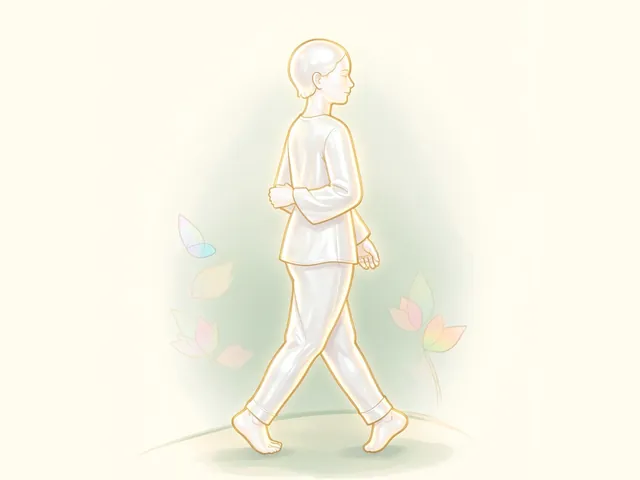
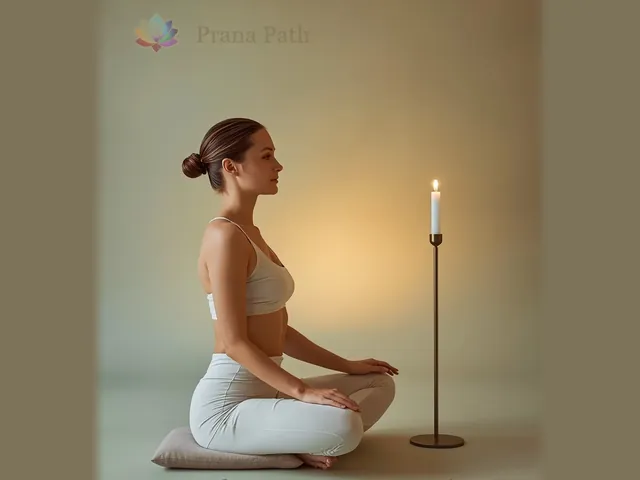
The Bhagavad Gita (6.16-17) teaches balance in eating, sleeping, rest and effort. It says a steady middle path supports a calm mind. This fits well with migraine care. Skipped meals, poor sleep and too much effort are all common triggers [2]. A regular daily rhythm is one gentle way to respond to those triggers. You can add Walking Meditation (Chankramana) or Trataka (Candle Gazing) on calm days, but avoid bright flames if light bothers you [2].
When to See a Doctor
Please see a doctor if you get headaches often or if the pain is new or strong. Migraine is common, and about 12 percent of Americans have it [2]. It often runs in families [2]. A doctor can check your symptoms and suggest the right care. Never stop your medicine to try breathing practice instead. Use pranayama only as a gentle extra.
Try it: simple steps
- Choose a quiet place where you feel safe.
- Sit or lie down in a comfortable position.
- Relax your shoulders, jaw and face.
- Breathe in slowly through your nose.
- Breathe out for a little longer than you breathed in.
- Try Bee Breath for one to three minutes.
- Stop if you feel dizzy or your head hurts more.
Questions people ask
Can pranayama help with migraine?
Research in our sources looks at relaxation methods, not pranayama itself [1]. Slow breathing may help you feel calmer, and stress is a common trigger [2]. It does not replace care from a doctor.
Which pranayama is best for migraine?
There is no proven best one. Many people start with Bee Breath (Bhramari) or Box Breathing (Sama Vritti) because they are gentle. Choose the one that feels easy and calm.
Should I practise during a migraine attack?
Pain, light and noise can make an attack hard to bear [2]. Many people prefer to rest in a quiet, dim room. Practise breathing on calmer days, and stop if it makes you feel worse.
What else can I do besides breathing?
Notice your own triggers, such as skipped meals, poor sleep or stress [2]. Keep a regular daily rhythm. Talk to your doctor about a plan that suits you.
Sources
- NCCIH: Relaxation Techniques · U.S. National Institutes of Health
- MedlinePlus: Migraine · U.S. National Library of Medicine
Written with AI assistance from the sources above, then checked for copied text and risky health claims. How we write
Practise it here
Related reading
This is general wellness information, not medical advice. Move slowly, never force a pose or a breath, and stop if you feel pain, dizziness or breathlessness. If you are pregnant, have high blood pressure, heart, lung or eye conditions, or recent surgery, ask your doctor before starting.