 Prana Path
How to Sleep Better: Best Position and Gentle Tips
Many people wonder which sleep position helps them rest best. The answer is personal, and small changes can make nights feel more comfortable. This guide shares gentle ideas for position, routine, and calming yoga practice.
This is general wellness information, not medical advice. Read our health disclaimer.
Why Good Sleep Matters
Your body stays busy while you sleep. Sleep helps you restore energy, learn, and remember things [1]. Your brain moves through light and deep stages, and you need all of them for healthy rest [1]. Sleep also gives your heart and blood vessels a break [1]. A comfortable position can help you stay asleep through these stages.
Finding Your Most Comfortable Sleep Position
There is no single perfect position for everyone [1]. Most people sleep on their back, side, or front. Try each one and notice how your body feels in the morning. Choose the position that leaves you with the least stiffness. A soft pillow under your head and another under your knees can add comfort. If pain keeps waking you, please speak with a doctor.
Simple Pillow Tips for Comfort
Pillows help your body rest in a relaxed shape. On your back, place a small pillow under your knees. On your side, put a pillow between your knees. Keep your head in line with your spine, not tilted up or down. Choose bedding that feels cool and soft. Change your pillow if it no longer feels supportive.
How Much Sleep Do You Need?
The right amount of sleep depends on your age, lifestyle, and health [1]. Adults usually need seven to nine hours each day [1]. Teenagers need about eight to ten hours [1]. Teens often fall asleep later because their body clocks shift during puberty [1]. Aim for a steady bedtime so your body learns when to rest.
Calm Your Body Before Bed
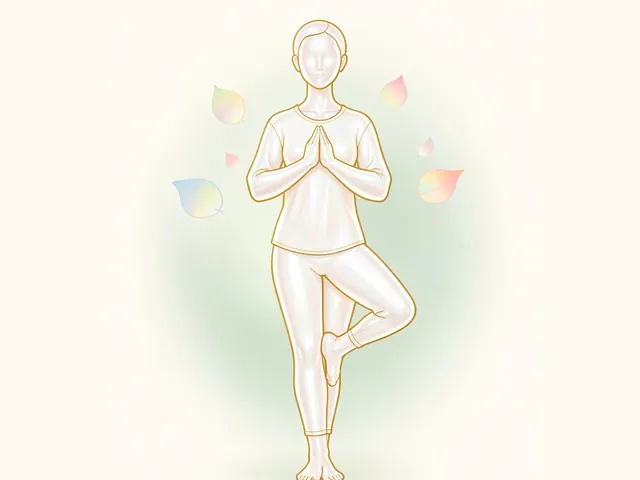
A short evening routine tells your body that the day is ending. Try Tree Pose (Vrikshasana), a standing balance pose, for a few slow breaths. Gentle Cobra Pose (Bhujangasana), a soft backbend, can ease a stiff back. Move slowly and stop if anything hurts. Then dim the lights and put away your phone. Quiet habits like these support a restful night.
Breath and Mind Practices for Sleep
Slow breathing can help your mind settle before bed [1]. Try Box Breathing (Sama Vritti), a breath with equal counts, while you lie in your favourite position. You can also hum softly with Bee Breath (Bhramari), a humming breath practice. The Bhagavad Gita speaks of balance in eating, resting, and effort (Gita 6.16-17). In simple words, too much or too little sleep does not serve you. Aim for a steady, moderate rhythm each day.
Try it: simple steps
- Pick a regular bedtime and wake time.
- Dim the lights an hour before bed.
- Try Tree Pose for a few slow breaths.
- Place a pillow under your knees or between them.
- Lie in the position that feels most comfortable.
- Practise Box Breathing for a few minutes.
- See a doctor if poor sleep lasts or worries you.
Questions people ask
What is the best position to sleep in?
The best position is the one that feels comfortable and lets you stay asleep. Try back, side, and front sleeping to see what suits you. Use pillows to support your head, knees, and back.
How many hours of sleep do adults need?
Adults aged 18 and over usually need seven to nine hours a day [1]. Your own needs depend on your age, lifestyle, and health [1].
Can yoga help me sleep better?
Gentle yoga and slow breathing can help you feel calm before bed. They are not a cure for sleep problems. If you often struggle to sleep, please talk to a doctor.
Why do teenagers fall asleep later?
During puberty, a teenager's body clock shifts. This makes them fall asleep and wake up later [1]. Early school starts can then make it hard to get enough sleep [1].
Sources
- MedlinePlus: Healthy Sleep · U.S. National Library of Medicine
Written with AI assistance from the sources above, then checked for copied text and risky health claims. How we write
Practise it here
Related reading
This is general wellness information, not medical advice. Move slowly, never force a pose or a breath, and stop if you feel pain, dizziness or breathlessness. If you are pregnant, have high blood pressure, heart, lung or eye conditions, or recent surgery, ask your doctor before starting.