 Prana Path
How to Stop Overthinking While Studying

Do you sit down to study and then get lost in worry? Many students do. This guide shows simple yoga ideas that can help your mind settle, so you can focus on one thing at a time.
This is general wellness information, not medical advice. Read our health disclaimer.
Why Your Mind Races When You Study
A little worry before a test is normal. It can even help you focus [1]. Trouble starts when the worry will not stop. Doctors say anxiety is a feeling of fear and unease, and it can bring a fast heartbeat and restlessness [1]. If your worry feels strong, lasts a long time or gets in the way of school, please talk to a doctor or another trusted adult.
Start With Slow Breathing
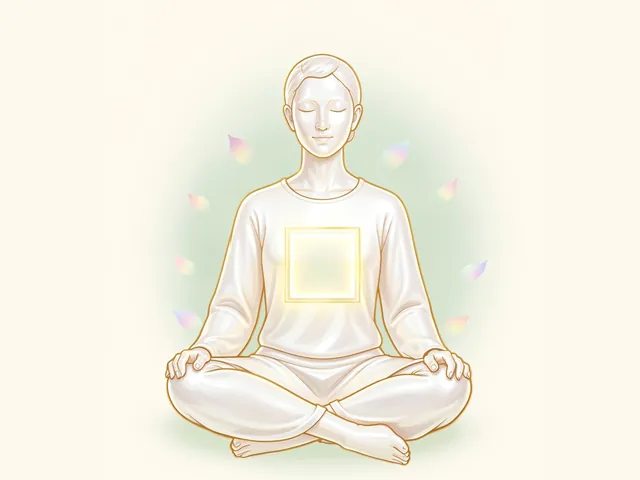
Your breath is always with you, so it is an easy place to begin. Slow breathing can feel calming, and it gives your mind one simple job. Try Box Breathing (Sama Vritti), a steady pattern of equal counts in, hold, out and hold. Do it for a minute or two before you open your books. If holding your breath feels odd, skip the holds and just breathe slowly. Anxiety can make the body feel tense and restless [1], so a calm breath is a kind way to start.
Use Sound and Stillness to Settle Down
When thoughts feel loud, a gentle sound can help. Bee Breath (Bhramari) uses a soft humming sound on the out-breath. The hum gives your mind something steady to follow. Sit comfortably and hum quietly for a few rounds. Then rest in the quiet for a moment. Feeling uneasy before a hard task is common [1], and this short pause can make the task feel less heavy.
Move Your Body Between Study Blocks
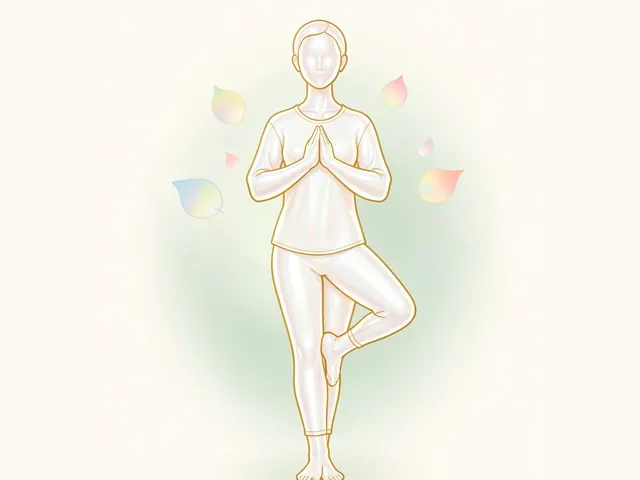
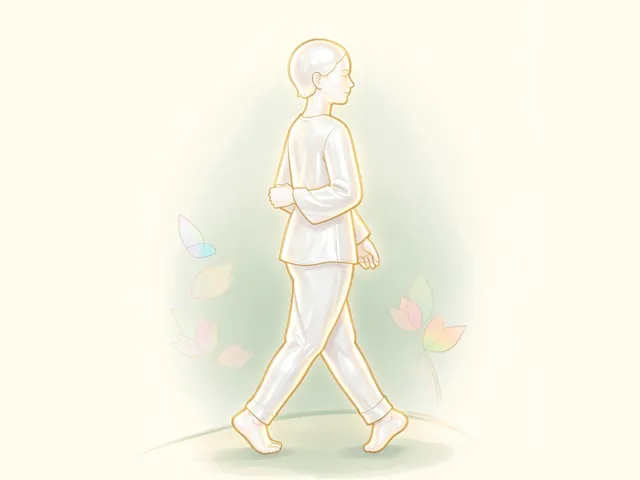
Sitting for a long time can leave your body tight and your mind busy. Stand up after each study block and try Tree Pose (Vrikshasana), a balance pose on one leg. Fix your eyes on one spot and breathe slowly. If you wobble, that is fine. Or try a short Walking Meditation (Chankramana), which means walking slowly and noticing each step. Stress can make people feel tense and restless [1], so gentle movement gives that energy somewhere to go.
Train Your Focus With Trataka
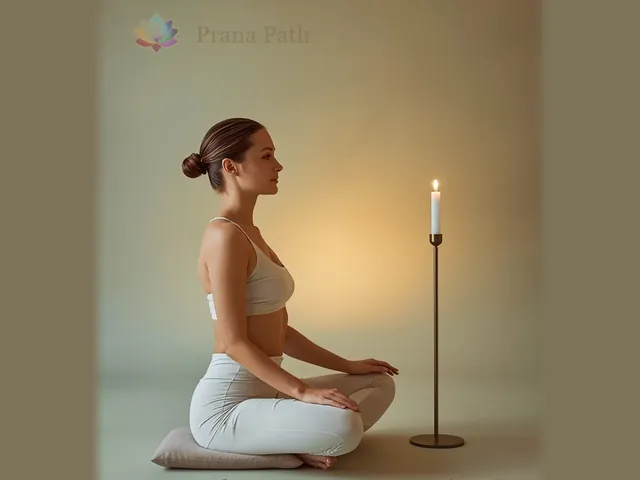
Overthinking often means your attention jumps from thought to thought. Trataka (Candle Gazing) is a calm way to practise holding your attention in one place. You look softly at a candle flame and let your eyes rest. When your mind drifts, you bring it back without scolding yourself. Anxiety can pull focus away from daily tasks like schoolwork [1], so a few minutes of this practice may help you build the habit of returning to one thing.
Find Balance, Like the Bhagavad Gita Teaches
The Bhagavad Gita (a sacred Indian text) says yoga works best when we avoid extremes. It speaks of balance in eating, sleeping, effort and rest (Gita 6.16-17). For students, this means you should not study nonstop or ignore your books. Plan short breaks, get enough sleep and stop when your session ends. Worry about ordinary things can take over daily life when it does not fade [1], so balance and a doctor's advice both matter if it feels too big.
Try it: simple steps
- Sit somewhere quiet and put your phone out of reach.
- Do one minute of Box Breathing (Sama Vritti).
- Pick one small task and write it on paper.
- Study for 25 minutes, then stop.
- Stand up for Tree Pose (Vrikshasana) or a slow walk.
- When a worry appears, say 'later' and return to the task.
- End the day with Bee Breath (Bhramari) and rest.
Questions people ask
Why do I overthink when I study?
Worry is a normal reaction to stress, such as a test or a hard task [1]. Your mind may try to solve everything at once. Slow breathing and short breaks can help you focus on one step.
Can yoga stop overthinking completely?
Yoga cannot promise to end overthinking. It can give you calm habits, like slow breath and gentle movement, that make worry feel lighter. Always see a doctor if worry is strong or lasts a long time [1].
When should I get help for study worry?
Get help if worry does not go away, gets worse, or affects school, sleep or relationships [1]. A doctor or school counsellor can listen and guide you. Asking for help is a sign of strength.
Sources
- MedlinePlus: Anxiety · U.S. National Library of Medicine
Written with AI assistance from the sources above, then checked for copied text and risky health claims. How we write
Practise it here

Related reading
This is general wellness information, not medical advice. Move slowly, never force a pose or a breath, and stop if you feel pain, dizziness or breathlessness. If you are pregnant, have high blood pressure, heart, lung or eye conditions, or recent surgery, ask your doctor before starting.