 Prana Path
How to Stop Overthinking and Negative Thoughts

Do your thoughts go round and round, even at night? You are not alone. This guide shares kind, simple yoga habits that can help your mind settle.
This is general wellness information, not medical advice. Read our health disclaimer.
Why the mind keeps looping
Worry is a normal human reaction to stress [1]. You might feel it before a test or a big choice. A little worry can even help you focus [1]. Trouble starts when the same thoughts repeat and will not leave. The first step is to notice this loop without blaming yourself.
When to ask a doctor for help
Some people feel worry that does not fade and may grow over time [1]. It can get in the way of work, school and close relationships [1]. One common type involves worry about everyday things like money, health and family, on most days for months [1]. If this sounds like you, please talk to a doctor. Yoga is a gentle support, not a replacement for care.
Slow your breath to slow your thoughts
Worry often shows up in the body as tension, restlessness and a fast heartbeat [1]. Slow breathing gives you something steady to focus on. Try Box Breathing (Sama Vritti, equal-length breath). Breathe in, hold, breathe out and hold again for the same count. You can also try Bee Breath (Bhramari, humming breath). Hum softly as you breathe out and feel the sound in your head.
Move and focus with simple practices
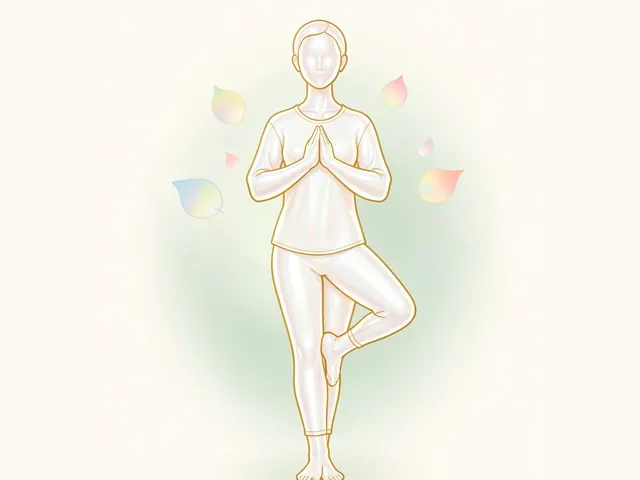
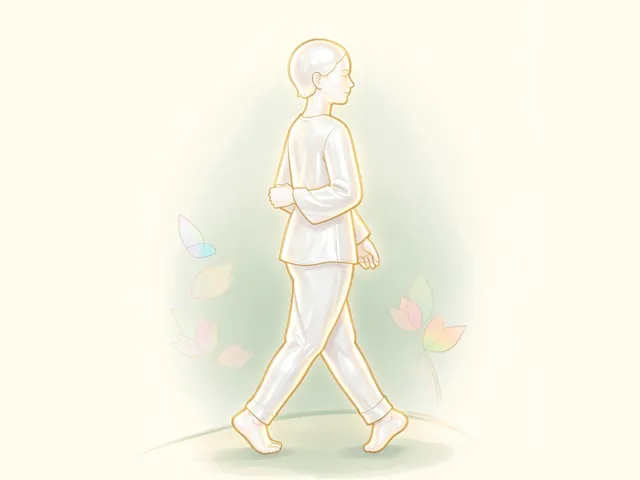
Feeling restless and tense is common when the mind races [1]. Gentle movement gives that energy somewhere to go. In Tree Pose (Vrikshasana, standing balance), you rest your eyes on one spot and feel your feet. Walking Meditation (Chankramana, mindful walking) lets you notice each step. Both ask for your attention in the present moment, which leaves less room for old worries.
Find balance, as the Bhagavad Gita teaches
The Bhagavad Gita (an ancient Indian text) speaks about balance in Gita 6.16-17. In simple words, it says to avoid too much or too little of eating, sleep, effort and rest. A tired, rushed life can feed a racing mind. Stress and your surroundings may play a part in anxiety [1]. So a steady daily rhythm is a kind gift to your mind.
Watch your thoughts like clouds
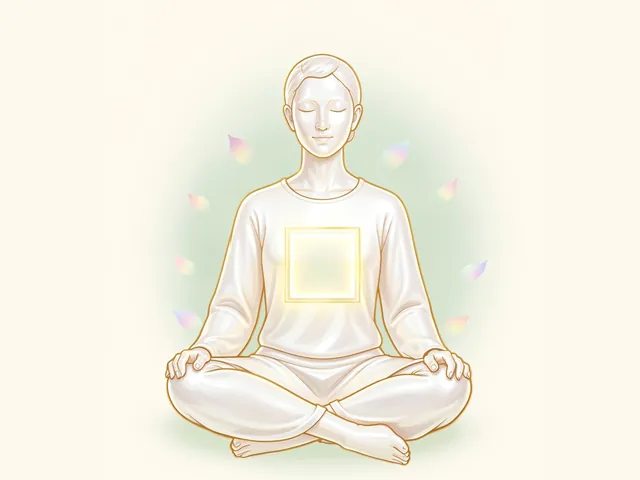
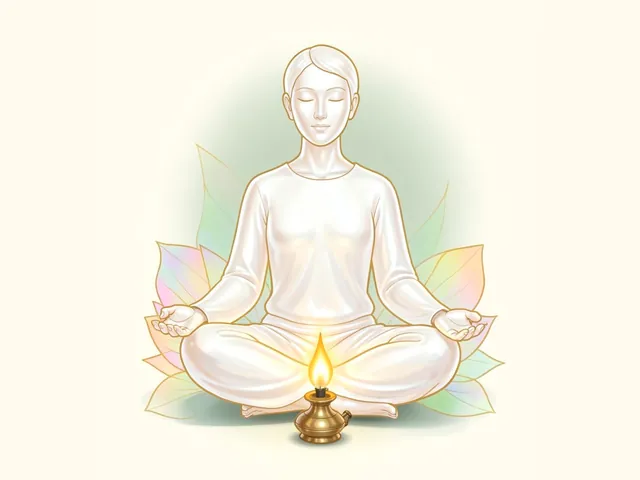
Experts do not know the exact cause of anxiety, and many factors may play a role [1]. So be gentle with yourself. Try Bhagavad Gita Meditation (Dhyana, quiet sitting practice). Sit still and let each thought pass like a cloud. You do not have to fight it or follow it. Come back to your breath each time you drift, and repeat as often as you need.
Try it: simple steps
- Pause and name the thought: 'I am having a worry.'
- Breathe slowly for one minute with Box Breathing.
- Hum softly with Bee Breath for five rounds.
- Stand in Tree Pose and rest your eyes on one spot.
- Take a short Walking Meditation outside.
- Sit quietly for five minutes and watch your thoughts pass.
- Talk to a doctor if worry stays strong or grows.
Questions people ask
How can I stop overthinking at night?
Try slow breathing or Bee Breath before bed. Keep your evening calm and your sleep times regular. If worry keeps you awake for weeks, please see a doctor.
Is overthinking the same as anxiety?
Not always. Worry is a normal reaction to stress [1]. With an anxiety disorder, the fear stays with you and may grow stronger over time [1]. A doctor can tell you which one you have.
Can yoga stop negative thoughts completely?
No. Yoga cannot promise to remove all thoughts. It can teach you to notice them and let them pass. Many people find this a calmer way to live with their mind.
How long should I practise each day?
Start small. Five minutes of breathing or quiet sitting is enough. Regular short practice is kinder and easier to keep than long sessions.
Sources
- MedlinePlus: Anxiety · U.S. National Library of Medicine
Written with AI assistance from the sources above, then checked for copied text and risky health claims. How we write
Practise it here

Related reading
This is general wellness information, not medical advice. Move slowly, never force a pose or a breath, and stop if you feel pain, dizziness or breathlessness. If you are pregnant, have high blood pressure, heart, lung or eye conditions, or recent surgery, ask your doctor before starting.