 Prana Path
How to Stop Overthinking Book by Rithvik Singh
Many readers search for the how to stop overthinking book by Rithvik Singh. They want calm and clear steps. This page explains what a book can and cannot do, and adds gentle yoga habits you can try today.
This is general wellness information, not medical advice. Read our health disclaimer.
About the how to stop overthinking book by Rithvik Singh
People often look for a short, simple book when their mind will not rest. A good book can teach you new ways to notice your thoughts. We have not summarised this book here, so check its page or a bookshop for the full details. Reading one idea at a time and trying it out usually works better than rushing through. A book is a helper, not a cure.
Why the mind keeps looping
Worry is a normal part of life. A little worry can help you focus before a test or a big choice [1]. Trouble starts when the worry will not go away. Doctors describe anxiety as a feeling of fear and unease. It can make you restless and tense, with a fast heartbeat [1]. If your thoughts feel like this most days, notice it kindly. You are not broken.
When to ask a doctor for help
Sometimes worry grows too big for self-help. Health sources say some people have anxiety that does not fade and may get worse over time [1]. It can get in the way of work, school and close relationships [1]. If this sounds like you, please talk to a doctor or a trained helper. Yoga and books can sit alongside that care. They should not replace it.
Slow your breath, slow your thoughts
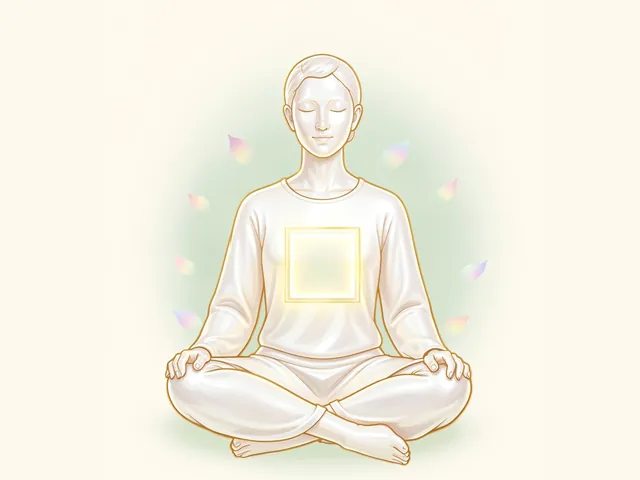
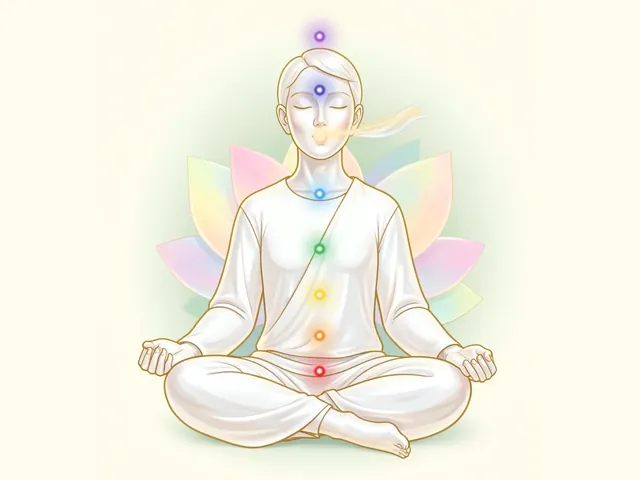
Breath is the easiest place to start. Try Box Breathing (Sama Vritti), a steady breath with equal counts in, hold, out and hold. Many people find a slow, even breath feels calming. Bee Breath (Bhramari) uses a soft humming sound on the out-breath. It gives your mind one simple thing to follow. Stop if you feel dizzy, and breathe normally.
Move gently and focus on one thing
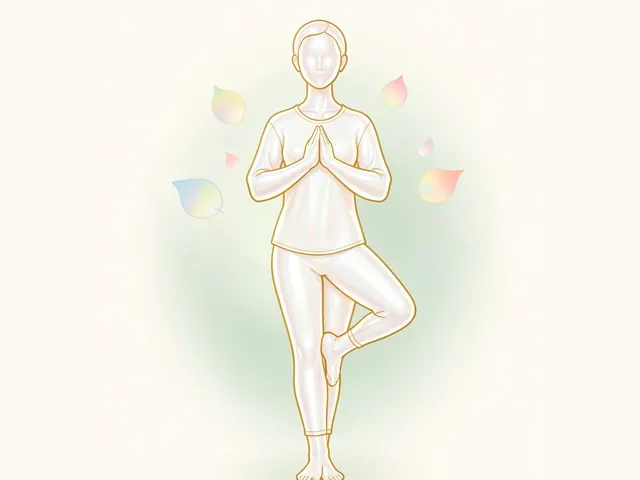
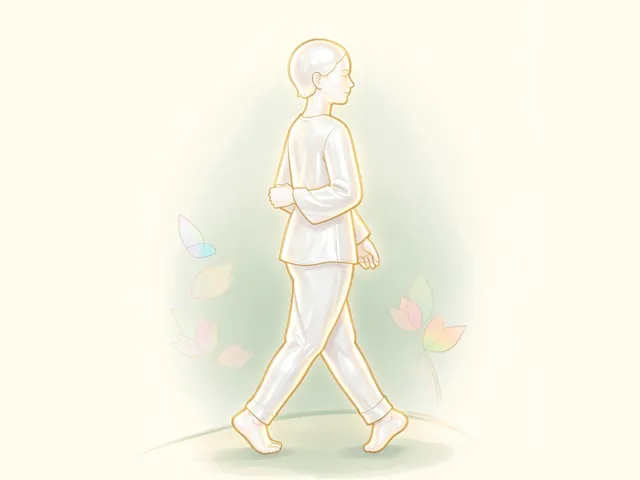
A busy mind often needs a simple task for the body [1]. Tree Pose (Vrikshasana) asks you to balance and look at one spot. Your thoughts have little room to wander. Walking Meditation (Chankramana) turns each step into the point of focus. Feel your foot touch the floor, again and again. When you drift off, gently return to the next step. Even five minutes counts.
Balance, from the Bhagavad Gita
The Bhagavad Gita (an ancient Indian text) speaks about balance in verses 6.16 and 6.17. In our own words, it says peace comes from moderation in food, sleep, work and rest. Too much or too little of anything can unsettle the mind. Overthinking can be the same: too much thinking and too little rest. Try a regular bedtime, a short break after work and one calm practice each day.
Try it: simple steps
- Sit comfortably and notice three slow breaths.
- Write down the worry in one short sentence.
- Try Box Breathing for two minutes.
- Do Tree Pose for a few slow breaths on each side.
- Take a short Walking Meditation, feeling each step.
- Keep regular sleep and meal times.
- Talk to a doctor if worry stays strong.
Questions people ask
Can a book really help me stop overthinking?
A book can give you new ideas and a calmer way to see your thoughts. It works best when you practise one idea at a time. If worry feels overwhelming, also speak to a doctor [1].
Is overthinking the same as anxiety?
Not always. Worry is a normal reaction to stress and can even help you focus [1]. Anxiety disorders are different, because the fear does not go away and can disrupt daily life [1].
Which yoga practice is best for a racing mind?
There is no single best choice. Many beginners start with Bee Breath (Bhramari) or Box Breathing (Sama Vritti) because they are simple. Choose the one that feels comfortable to you.
How long should I practise each day?
Start with five minutes. Short, regular practice is easier to keep than long, rare sessions. Slowly add time only if it feels good.
Sources
- MedlinePlus: Anxiety · U.S. National Library of Medicine
Written with AI assistance from the sources above, then checked for copied text and risky health claims. How we write
Practise it here
Related reading
This is general wellness information, not medical advice. Move slowly, never force a pose or a breath, and stop if you feel pain, dizziness or breathlessness. If you are pregnant, have high blood pressure, heart, lung or eye conditions, or recent surgery, ask your doctor before starting.