 Prana Path
Yoga Poses for Beginners: Find Balance and Relaxation
You do not need a long list of poses to enjoy yoga. A few simple shapes, done slowly with steady breathing, are enough. They can stretch you, steady you and help you settle. Here are eight poses for beginners. You will also learn how to make each one easier and how to stay safe.
Before you begin
Wear loose, comfy clothes and keep a glass of water nearby [2]. The NHS suggests this for its home stretching routines too. Clear a little floor space next to a wall or a sturdy chair [3]. That way you have something to touch if you wobble. Move slowly. Add more repeats bit by bit over the weeks, not all at once [2]. Breathe through your nose if that feels easy, and let the breath set the pace. If a pose makes you hold your breath, ease off until your breathing feels smooth again.
Grounding poses: Mountain, Cat-Cow and Child's Pose
Mountain Pose (Tadasana) looks like plain standing, but it quietly teaches good posture. Stand with your feet hip-width apart and your weight spread across both feet. Lift the top of your head and relax your shoulders. Stay for five breaths. Cat-Cow is done on your hands and knees. As you breathe in, let your belly drop and look forward. As you breathe out, round your back like a stretching cat. Repeat six times. Child's Pose (Balasana) is your resting place at any time. Spread your knees wide and move your hips back towards your heels. Rest your forehead on the floor or a cushion. Put a folded blanket under your knees if they hurt.
Balance poses: Tree Pose and a heel-to-toe walk
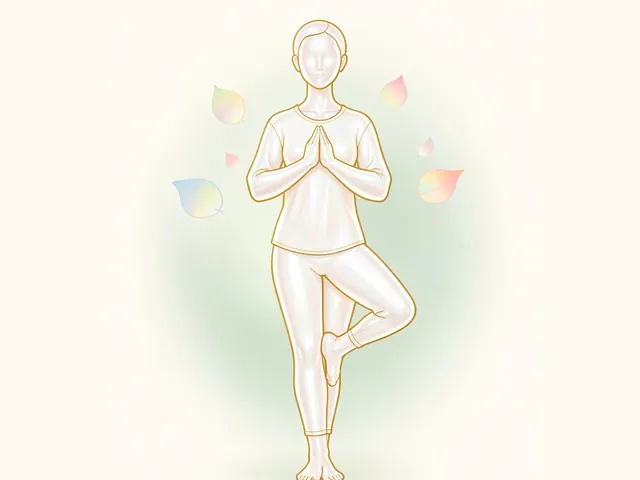
Balance work is gentle but surprisingly absorbing. For Tree Pose, stand beside a wall and shift your weight onto one foot. Rest the other foot against your ankle or calf, and never press into the knee. Hold for five breaths, then change sides. You can also try a slow heel-to-toe walk. Place one heel just in front of the toes of your other foot with each step. This is one of the balance moves the NHS shows for home practice, and it makes a nice warm-up [3]. The NHS recommends balance and stretching work on at least two days each week [2][3].
Opening poses: Cobra and a seated side stretch
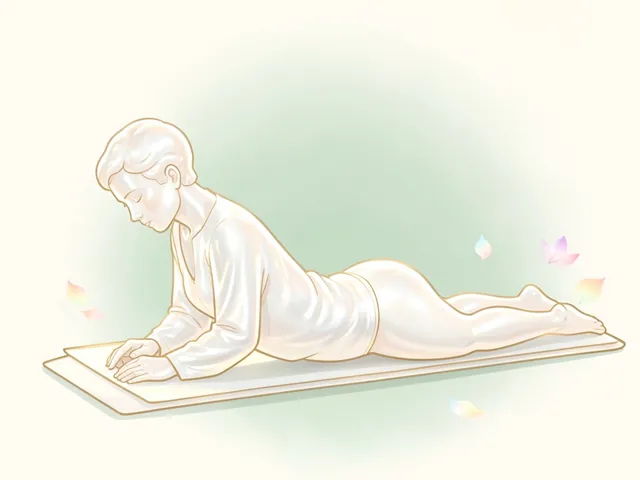
Cobra Pose (Bhujangasana) gently opens the front of the body. Lie on your front with your hands under your shoulders. Lift your chest only a few centimetres. Keep your lower ribs close to the floor and your elbows bent. Breathe in as you rise and out as you lower, five times. For a side stretch, sit tall in a chair. Slide one hand down towards the floor and feel the other side of your body lengthen. This is much like the sideways bend in the NHS stretching routine [2]. Keep the movement small and smooth.
Relaxing poses: Legs on a chair and Corpse Pose
To unwind, lie on your back and rest your calves on the seat of a chair or sofa. Let your arms rest loosely by your sides. Stay for two to three minutes. Finish with Corpse Pose (Savasana). Lie with your legs long, palms up and eyes closed. Let the floor hold your full weight for five minutes. This is often the part beginners love most. If your thoughts race, count ten slow breaths, then start again from one.
Safety first
The U.S. National Center for Complementary and Integrative Health describes yoga as generally safe for healthy people [1]. This is when they practise properly with a qualified teacher. It notes that sprains and strains are the most common injuries, especially of the knee or lower leg. Emergency rooms see more yoga injuries in people aged 65 and over [1]. So older beginners should go extra gently. Some people may need to change or skip some poses [1]. This includes people with knee or hip injuries, spine problems or very high blood pressure. It also includes people with balance problems or glaucoma, an eye condition. If you are pregnant, ask your doctor first. Do the same if you have a heart problem, epilepsy or recent surgery, or are in a mental-health crisis. Stop if you feel dizzy, numb or in pain.
Try it: simple steps
- Mountain Pose: stand tall for five calm breaths.
- Cat-Cow: six slow rounds, moving with the breath.
- Child's Pose: rest for five breaths.
- Tree Pose by a wall: five breaths on each side.
- Cobra Pose: lift and lower five times, keeping it low.
- Seated side stretch: three gentle bends to each side.
- Legs on a chair, then Corpse Pose: rest for five to eight minutes.
Questions people ask
How long should I hold each yoga pose?
For beginners, three to five steady breaths is plenty. Hold a pose longer only when it feels easy and your breathing stays smooth.
Which yoga poses should beginners skip?
Leave headstands, shoulder stands and full lotus until a qualified teacher can guide you. Gentle poses like the ones above are a better place to start.
What if I cannot balance in Tree Pose?
That is completely normal. Keep a hand on the wall and rest your foot low on the ankle. Enjoy the small gains over time.
Is it fine to practise yoga poses every day?
Gentle daily practice suits many people. Mix easier days with slightly more active ones, and rest whenever your body asks.
Sources
- NCCIH: Yoga - Effectiveness and Safety · U.S. National Institutes of Health
- NHS: Flexibility exercises · NHS (UK)
- NHS: Balance exercises · NHS (UK)
Written with AI assistance from the sources above, then checked for copied text and risky health claims. How we write
Practise it here
Related reading
This is general wellness information, not medical advice. Move slowly, never force a pose or a breath, and stop if you feel pain, dizziness or breathlessness. If you are pregnant, have high blood pressure, heart, lung or eye conditions, or recent surgery, ask your doctor before starting.