 Prana Path
Yoga for Flexibility: A Gentle Guide for Beginners
Many people come to yoga because they feel stiff and want to move more freely. This guide shows a gentle, patient way to begin. You do not need to touch your toes or be bendy to start.
This is general wellness information, not medical advice. Read our health disclaimer.
What Does Flexibility Mean in Yoga?
Flexibility is how easily your body moves through its range of motion. Yoga is an old practice rooted in Indian philosophy. In the United States, yoga classes often mix three things. These are asanas (yoga poses), pranayama (breath practice) and meditation (quiet focus of the mind) [1]. The poses ask you to stretch and move slowly. This guide does not promise results. Every body is different, and progress is never a race.
Pick a Gentle Style
There are many yoga styles. Some are soft and slow, and some are hard work [1]. Beginners often feel best with a slow, gentle class. Look for words like gentle, beginner or restorative (slow and resting). A good teacher will show you easy options for each pose. Choose the style that feels kind to your body today.
Easy Poses to Start With
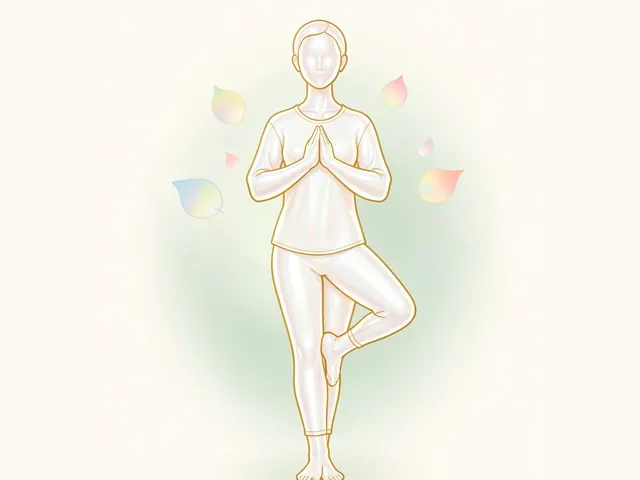
Start with a few simple poses and hold each one for a few calm breaths. Cobra Pose (Bhujangasana) is a gentle way to lift your chest while you lie on your tummy. Keep your elbows bent and your lower body relaxed. Tree Pose (Vrikshasana) is a standing pose that trains your balance. Research suggests that yoga may help with balance [1]. Hold a wall or chair if you wobble.
Use Your Breath to Soften
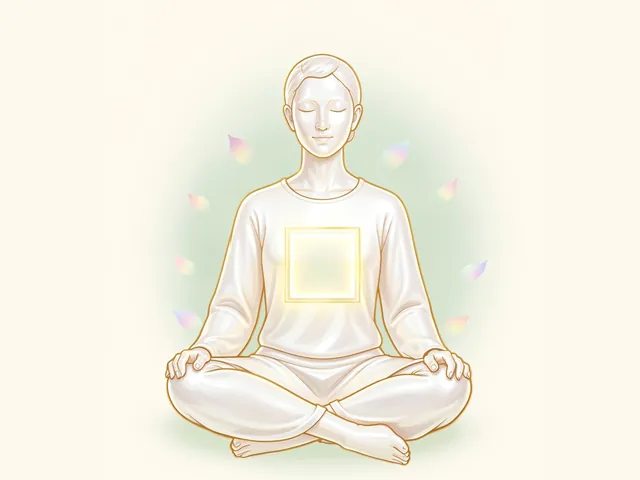
A tight, held breath often makes the body feel tighter. Try Box Breathing (Sama Vritti) before or after you move. Breathe in for four counts, hold for four, breathe out for four, and hold for four. Studies on yoga suggest it may help people manage stress [1]. Calm breathing can make stretching feel easier and more pleasant.
Balance and Moderation: Wisdom from the Gita
The Bhagavad Gita (a holy Indian text) teaches balance in verses 6.16 and 6.17. It says a steady life avoids too much and too little, in eating, rest and effort. This fits stretching well. Pushing too hard can hurt, and never practising brings no change. Research suggests yoga may support good health habits [1]. Short, regular sessions are a calm way to build them.
Stay Safe and Be Patient
Move slowly and stop if you feel sharp pain. A mild stretch is fine, but pain is a signal to ease off. Never force a pose or bounce in it. If you have an injury or a health problem, ask your doctor before you start. Remember that yoga is for general wellness and does not treat illness [1]. Be kind to yourself, and let your body set the pace.
Try it: simple steps
- Warm up with two minutes of easy walking or gentle arm circles.
- Breathe in and out slowly through your nose.
- Try Cobra Pose (Bhujangasana) for three to five calm breaths.
- Stand in Tree Pose (Vrikshasana) near a wall for support.
- Ease into each stretch until you feel mild tension, never pain.
- Finish with one minute of Box Breathing (Sama Vritti).
- Practise a few times a week, and rest when your body asks.
Questions people ask
Can I do yoga if I am not flexible?
Yes. Yoga is for every body, and you do not need to be bendy to begin. Start with gentle poses and use props like a cushion or a wall. Many yoga styles are soft and slow [1].
How often should I practise yoga for flexibility?
Short, regular sessions are a gentle way to begin. Even ten minutes a few times a week is a good start. Listen to your body and rest when you feel tired or sore.
Which yoga style is best for beginners?
Choose a gentle or beginner class first. Yoga styles range from gentle to demanding [1]. A slow class lets you learn the poses and breath safely. Ask a teacher if you are unsure.
Is it normal to feel sore after yoga?
A little tiredness in your muscles can happen when you try something new. Sharp or lasting pain is not normal, so stop and rest. See a doctor if pain does not go away.
Sources
- NCCIH: Yoga - Effectiveness and Safety · U.S. National Institutes of Health
Written with AI assistance from the sources above, then checked for copied text and risky health claims. How we write
Practise it here
Related reading
This is general wellness information, not medical advice. Move slowly, never force a pose or a breath, and stop if you feel pain, dizziness or breathlessness. If you are pregnant, have high blood pressure, heart, lung or eye conditions, or recent surgery, ask your doctor before starting.