 Prana Path
How to Stop Overthinking While Sleeping

You lie down tired, but your mind will not stop. Thoughts about work, money or tomorrow keep looping. This guide gives you gentle yoga-based ideas to ease a busy mind at night.
This is general wellness information, not medical advice. Read our health disclaimer.
Why your mind races at night
The day is quiet now, so your thoughts get louder. Worry often shows up when you finally stop moving. People with anxiety often feel scared, worried and uneasy, as if something bad may happen. It can make you restless, tense and sweaty, and it can speed up your heartbeat [1]. This is a normal reaction to stress for many people [1]. Knowing this can help you feel less alone.
Start winding down before bed
Your mind needs a gentle slope into sleep. Pick a time each evening to switch off screens and bright lights. Write tomorrow's tasks on paper so your mind can let them go. Stress is one of the things linked to anxiety, so lowering stress in the evening is a kind goal [1]. Try a warm drink without caffeine and some slow stretching.
Use your breath to slow down
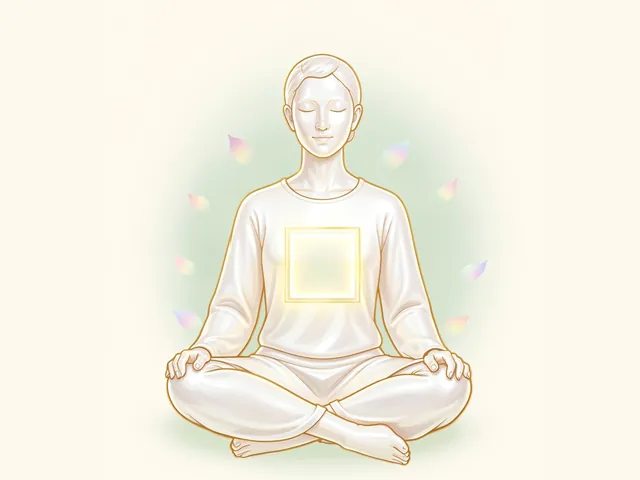
Breath is the easiest tool you have in bed. Try Box Breathing (Sama Vritti), a steady breath with equal counts. Breathe in for four counts, hold for four, breathe out for four and hold for four. You can also try Bee Breath (Bhramari), where you hum softly on the out breath. Slow breathing can feel calming when your body feels tense and your heart feels fast [1]. Stop if you feel dizzy, and breathe normally.
Give your thoughts a gentle focus
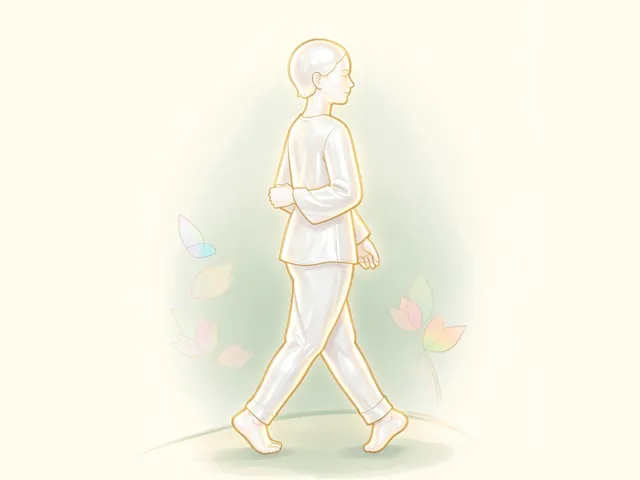
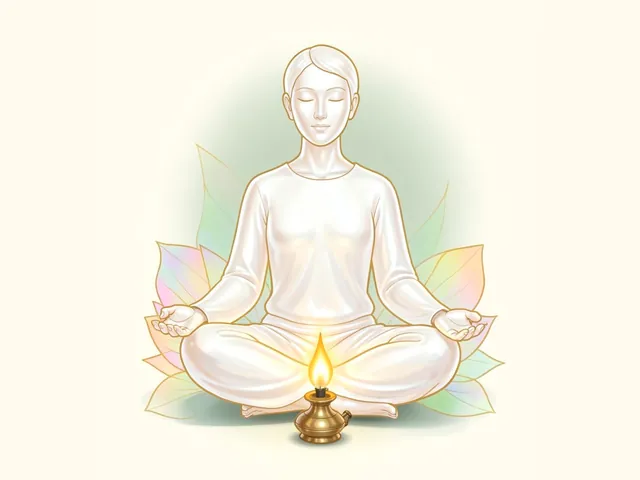
A busy mind needs something simple to rest on. Try Walking Meditation (Chankramana), a slow walk where you feel each step, for a few minutes in the evening. You can also try Bhagavad Gita Meditation (Dhyana, or quiet focus). Sit and follow one calm line or word, and return to it when thoughts drift. Anxiety can help us focus in small doses, but at night we want the opposite, which is rest [1]. Be patient, because your mind will wander and that is normal.
Find balance, as the Gita teaches
The Bhagavad Gita (an ancient Indian text) speaks of balance in Gita 6.16-17. In simple words, it says yoga suits people who are moderate in eating, resting, working and sleeping. Too much or too little of anything can unsettle us. Try steady habits: regular meal times, a fair workload, and a set bedtime. Worry about ordinary things like health, money, work and family is common [1]. Balance in your day can make room for a calmer night.
When to talk to a doctor
Sometimes worry is more than a bad night. An anxiety disorder means a person keeps feeling worried or afraid for a long time, and the fear can grow stronger as months go by [1]. Generalised anxiety disorder means excessive worry on most days for at least six months [1]. If worry harms your sleep, work or relationships, please see a doctor [1]. Yoga can be a gentle support, but it does not replace medical care.
Try it: simple steps
- Set a regular bedtime and wake time.
- Switch off screens an hour before bed.
- Write tomorrow's tasks on paper.
- Do a few slow stretches.
- Try Box Breathing (Sama Vritti) for a few minutes.
- Hum softly with Bee Breath (Bhramari).
- If thoughts return, gently come back to your breath.
Questions people ask
Why do I overthink when I try to sleep?
The quiet and dark leave space for worries to appear. Stress and anxiety can keep the mind busy [1]. A calm evening routine can help you feel ready for rest.
Can breathing help me stop overthinking at night?
Slow, steady breathing can feel calming [1]. Try Box Breathing (Sama Vritti) or Bee Breath (Bhramari) in bed. Breathe gently and stop if you feel dizzy.
Is overthinking at night a sign of anxiety?
Occasional worry is a normal reaction to stress [1]. If worry is strong, lasts for weeks and affects daily life, it may be more than ordinary stress [1]. Please speak to a doctor for advice.
How long does it take to calm a busy mind?
It differs for every person, so be kind to yourself. Practise a little each evening and keep your routine steady. If you still struggle, ask a doctor for help [1].
Sources
- MedlinePlus: Anxiety · U.S. National Library of Medicine
Written with AI assistance from the sources above, then checked for copied text and risky health claims. How we write
Practise it here

Related reading
This is general wellness information, not medical advice. Move slowly, never force a pose or a breath, and stop if you feel pain, dizziness or breathlessness. If you are pregnant, have high blood pressure, heart, lung or eye conditions, or recent surgery, ask your doctor before starting.