 Prana Path
Mindfulness for Beginners: A Gentle Guide to Reducing Stress
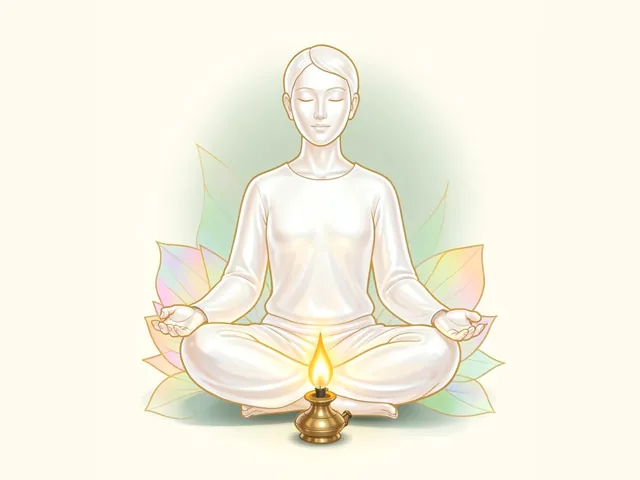
Mindfulness simply means noticing what is happening right now, inside you and around you. You do this with a friendly, curious attitude. It does not ask you to empty your mind or sit for hours. A few minutes a day is a lovely place to begin.
What mindfulness really is
Researchers describe mindfulness as keeping your attention on the present moment while letting go of judgement [1]. The NHS puts it in everyday words. It means tuning in to your thoughts, your feelings, your body and the world around you, one moment after another [2]. India's yoga tradition has a close cousin of this, called dharana and dhyana. These mean steady attention, and then effortless attention. You can explore them in How to Meditate - the Bhagavad Gita Way.
Why people practise it
Most people who try mindfulness meditation say they do it to relax or ease stress. Many also hope for better sleep [1]. Research on stress, anxiety, low mood and sleep looks promising. But the studies vary a lot, and some results may have been read too hopefully [1]. In the UK, the National Institute for Health and Care Excellence sets health guidance. It recommends mindfulness-based therapy as an option for milder depression [2]. Still, it is not right for everyone, and some people find it does not help [2].
Thoughts are visitors, not orders
Beginners often say, 'As soon as I sit still, my head fills with worries.' That is completely normal. The aim is not to push thoughts away. Instead, see them as passing events in the mind that do not have to run the show [2]. A handy trick is to label them quietly, such as 'planning' or 'this is worry'. Then come back to the breath [2]. Each time you notice and return, you are doing the practice, not failing at it.
Bring it into daily life
You do not need a cushion to be mindful. The NHS suggests choosing a regular moment, like your morning commute or a lunchtime walk. Use it to notice sights, sounds and feelings in your body. You could even try small changes, like a new seat or a new route, to wake up your attention [2]. If sitting still feels too hard, gentle yoga or walking can help settle a busy mind [2]. Our Walking Meditation guide shows you how.
Formal practice made simple
Mindfulness meditation is often done sitting down. You sit quietly and rest your mind on one thing. This could be sounds, the breath or feelings in the body. You gently come back to it whenever the mind wanders [2]. Some set courses, such as mindfulness-based stress reduction, mix meditation with group talks. They also teach ways to use the skills in stressful moments [1]. If you like counting, a few rounds of Box Breathing can help you settle before you start.
A gentle first week
Days one and two: sit for three minutes and simply count ten slow breaths. Start again whenever you lose track. Days three and four: stretch to five minutes and add a short body scan. Move your attention from your feet up to your head. Days five to seven: keep the five minutes. Also pick one everyday activity, such as brushing your teeth or drinking tea, and do it with full attention. At the end of the week, notice what felt easiest and keep that.
Safety first
Mindfulness is usually thought to carry few risks. But it has not been studied closely enough to make firm statements about safety. The unwanted effects people report most often are anxiety and low mood [1]. Please speak with your doctor first if you are pregnant or have a heart condition or epilepsy. Do the same if you have had recent surgery or are in a mental-health crisis. If you feel dizzy, very upset or overwhelmed, open your eyes, stop and steady yourself. In a crisis, contact your local emergency number or a helpline straight away.
Try it: simple steps
- Sit comfortably on a chair, with your back upright but not stiff. Set a timer for five minutes.
- Close your eyes, or rest your gaze softly on the floor in front of you.
- Notice three things you can hear. Then notice the feeling of your feet on the ground.
- Bring your attention to the breath where you feel it most, at the nose, chest or belly.
- When a thought pulls you away, name it kindly in one word. Then return to the breath.
- When the timer sounds, take one slower breath. Notice how you feel before moving on.
Questions people ask
How long should a beginner practise mindfulness?
Five minutes a day is a great start. Doing it often matters more than doing it for long. A short daily session beats an occasional long one.
What if I cannot stop thinking?
You are not meant to stop. Simply notice that you are thinking, label it gently and come back to your breath. That moment of noticing is the practice.
Is mindfulness the same as meditation?
Mindfulness is a way of paying attention that you can bring to anything, such as eating or walking. Mindfulness meditation is a set time when you practise that attention on purpose.
Sources
- NCCIH: Meditation and Mindfulness - Effectiveness and Safety · U.S. National Institutes of Health
- NHS: Mindfulness · NHS (UK National Health Service)
Written with AI assistance from the sources above, then checked for copied text and risky health claims. How we write
Practise it here
Related reading
This is general wellness information, not medical advice. Move slowly, never force a pose or a breath, and stop if you feel pain, dizziness or breathlessness. If you are pregnant, have high blood pressure, heart, lung or eye conditions, or recent surgery, ask your doctor before starting.